COMPARING COMPENSATION AND COST OF LIVING
This page uses calculations by the Economic Policy Institute (EPI) for cost of living by county in the United States. The EPI Family Budget combines data from relevant federal government agencies, supplemented as necessary, on costs of housing, food, childcare, transportation, healthcare, and taxes. A detailed outline of the methodology for the calculator can be on the EPI website.
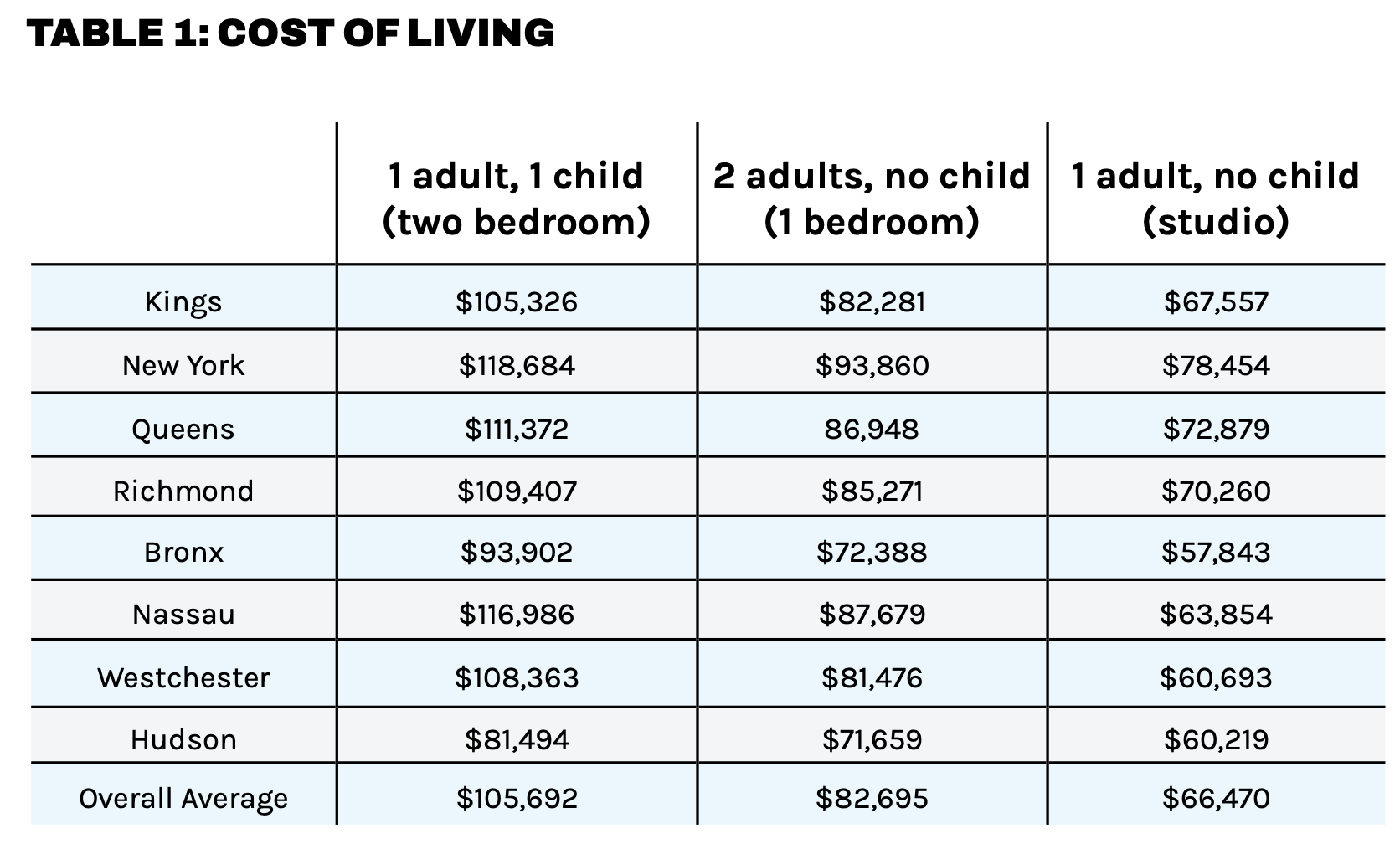
Table 1 shows cost of living estimates for three different household structures. A key distinction between these three categories is that a single adult is priced for a studio apartment, two adults for a one-bedroom, and one adult and one child for a two-bedroom.
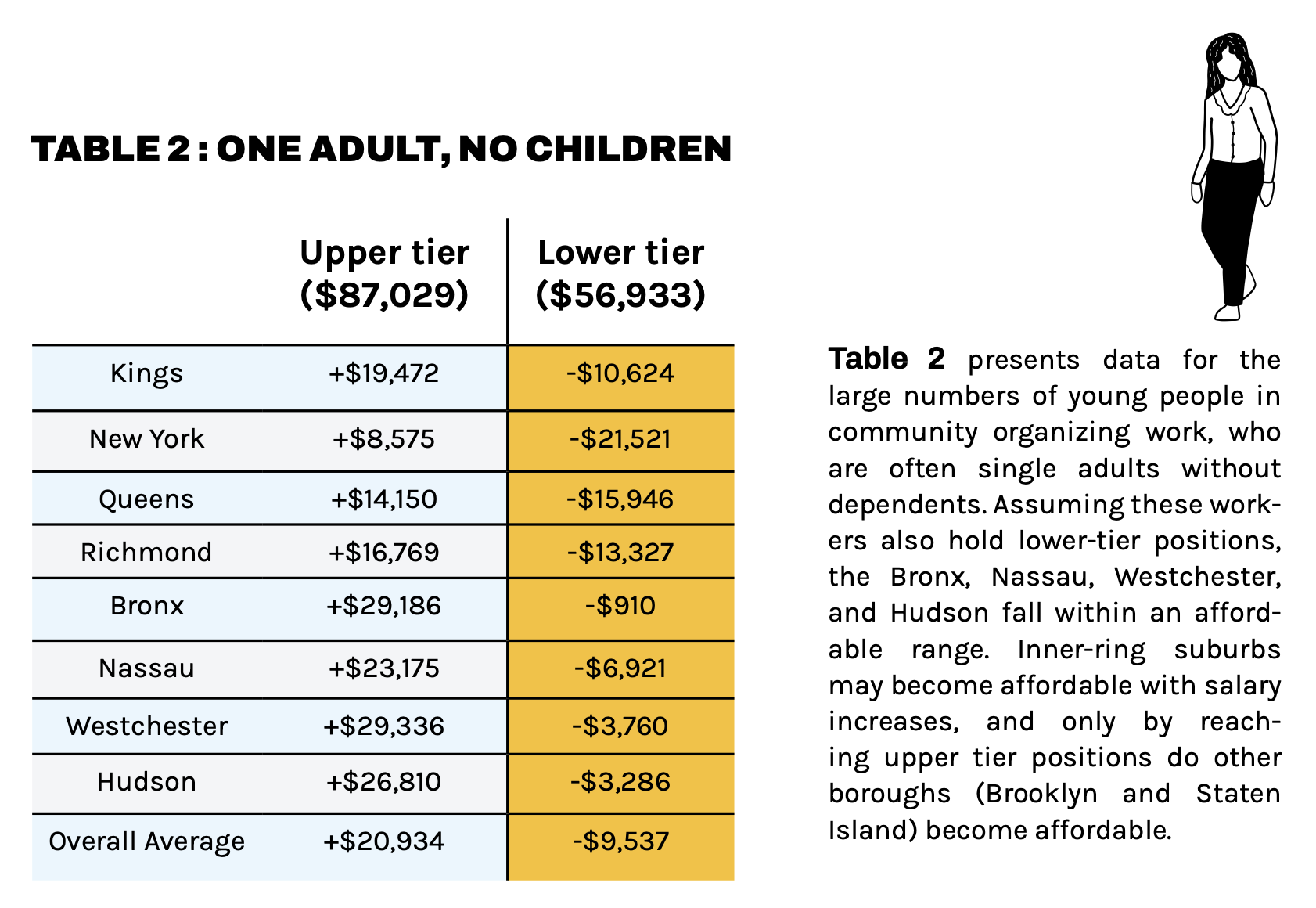
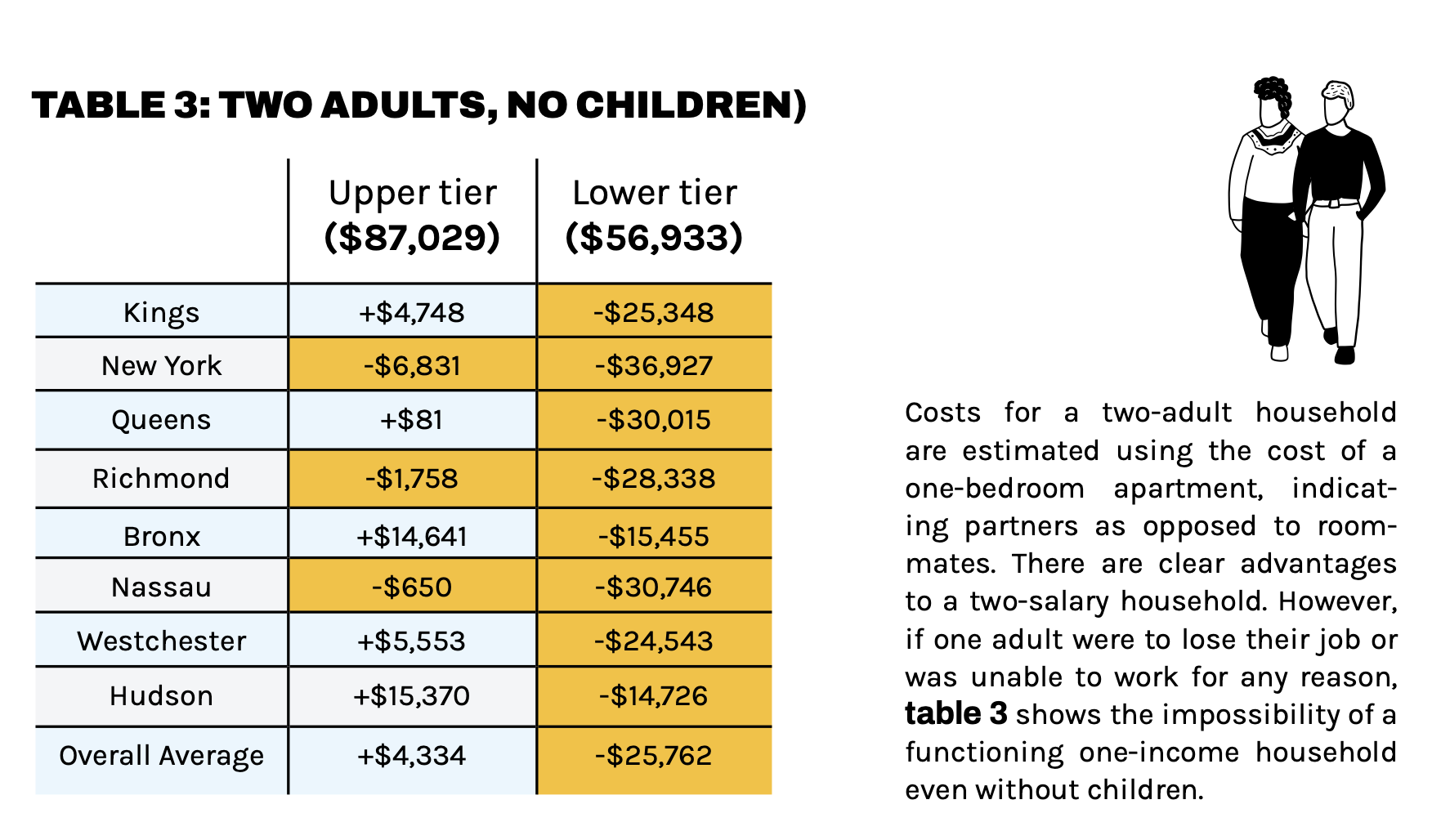
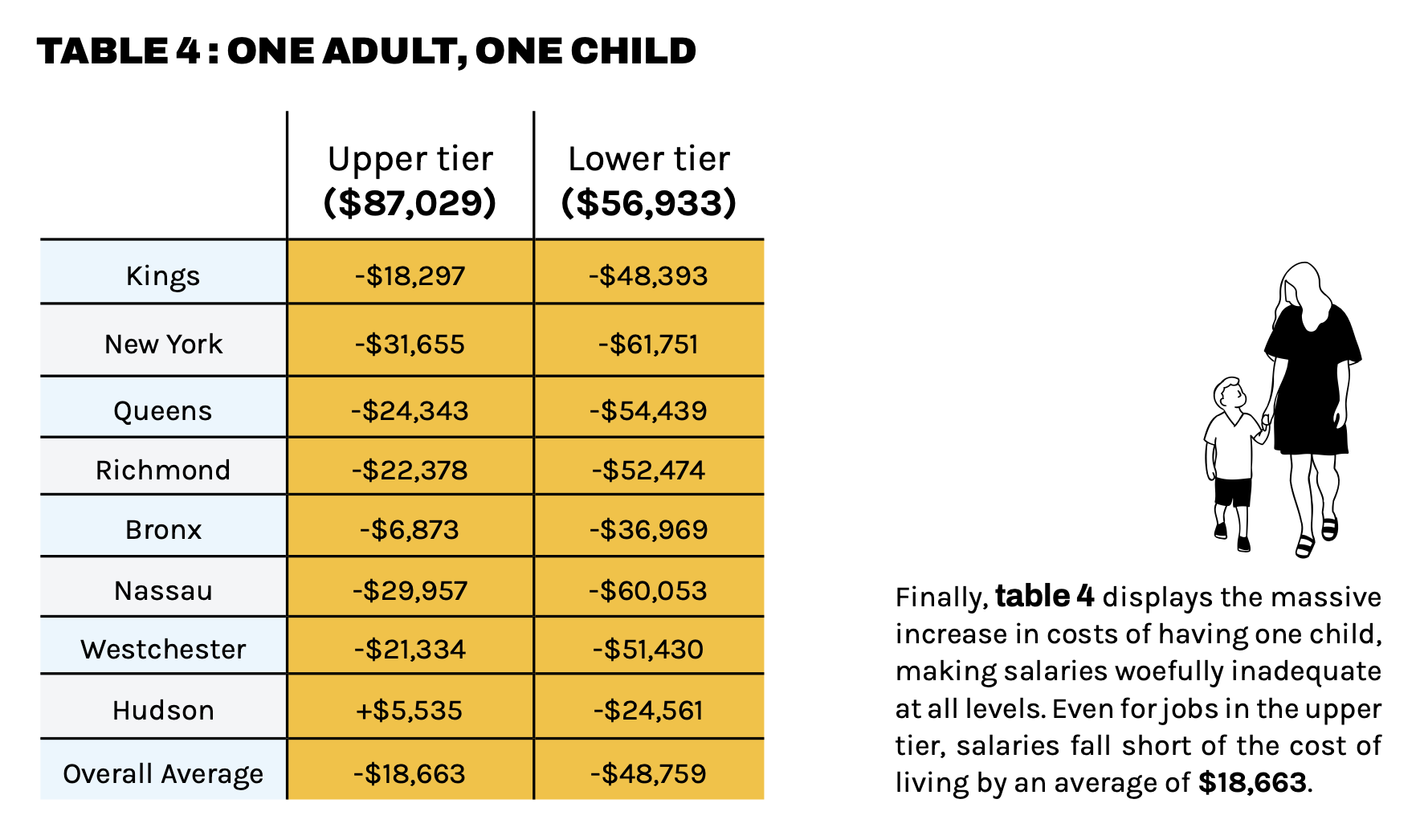
Tables 2–4 show the differences between the salary averages presented above and these costs. The lower tier average salary (first row of numbers) is $56,933 and the upper tier (second row) is $87,029. In other words, the difference is how much more employers need to pay in order for organizers to afford the cost of living.
Conclusion
Currently, employers count on community organizers to live in the Bronx or outside the five boroughs without any dependents. The gap between average organizer salaries and cost of living is untenable when considering the cost of living in Manhattan. The jumps in costs across counties and as family size increases come, in large part, from housing. Given the housing affordability crisis in New York City and across the country, it follows that 1/3 of organizing jobs posted since the start of 2024 are for tenant organizers. The same affordability issues that impact many of the communities that organizers serve, which are leading long-time residents to leave the core of the city, impact organizers as well, especially when they start families.