KEY NUMBERS AND TAKEAWAYS
A. Nonprofit NY 2024 Compensation Study
Overview
41% of respondents (146/381) have a budget between $1,000,000–$4,999,999.
39.4% of respondents (150/381) have roles categorized as “Human Services.” (Organizational categories determined by IRS NTEE codes, definitions of Human Services orgs found here under “P”.)
Respondents on average employ 67 full-time employees and 28 part-time employees.
Respondents on average employ 51 employees who are people of color, an average of 54% of an organization’s paid staff (FTE and PTE).
Respondents on average employ 6 LGBTQ+ employees and 2.5 employees who are transgender, genderqueer, questioning, self-identified, or gender nonconforming.
Respondents on average employ 27 people who identify as women.
In community organizer positions specifically, defined by the compensation study as “responsible for grassroots outreach efforts, advocacy campaigns, and recruiting and training volunteers to support the outreach efforts of the organization”:
18.11% (69/318) of organizations identify as having community organizers on staff.
57.9% (40/69) of the organizations identify as in the field of Human Services.
42% (29/69) of the organizations have a budget between $1,000,000–$4,999,999.
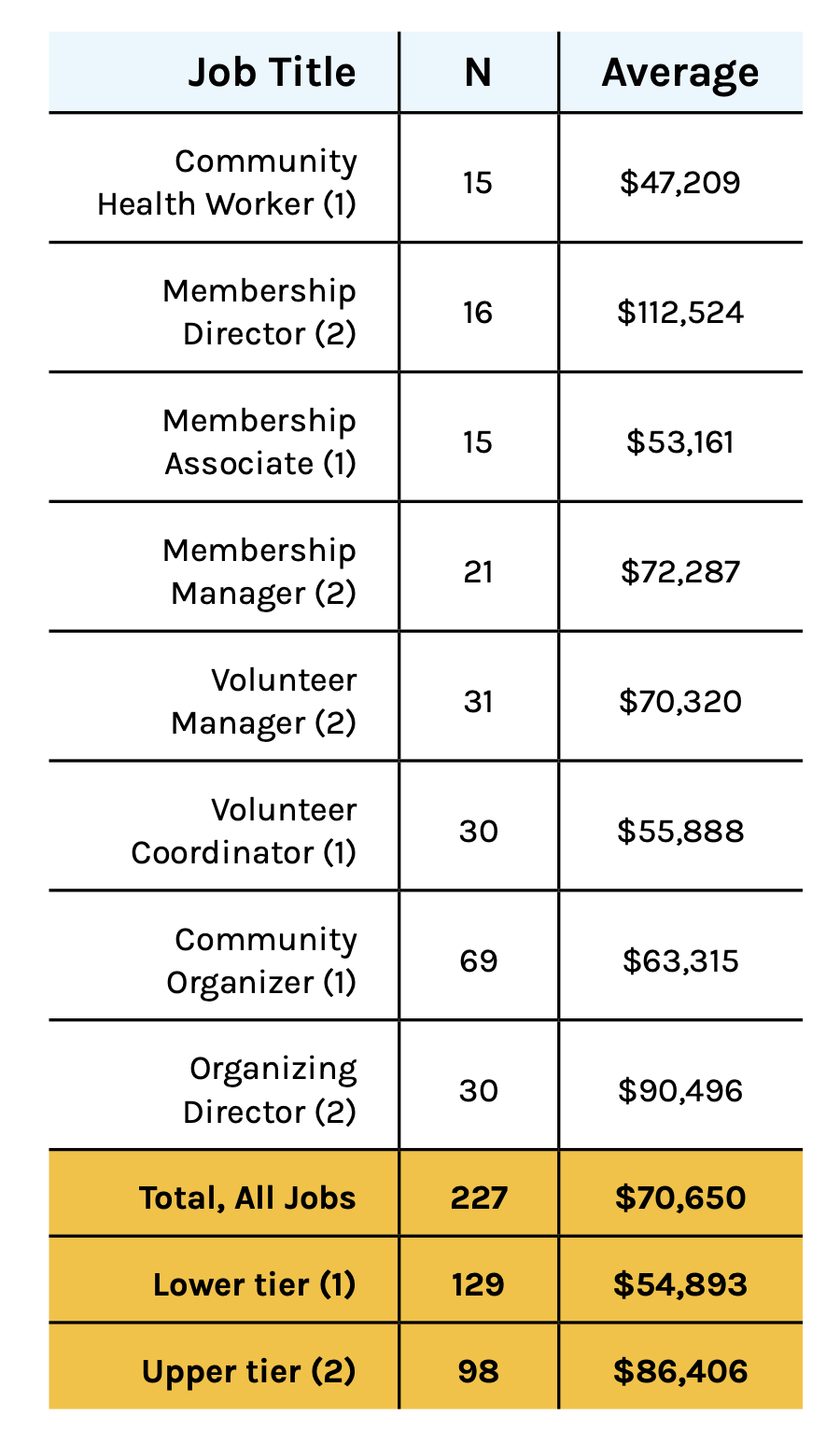
Compensation
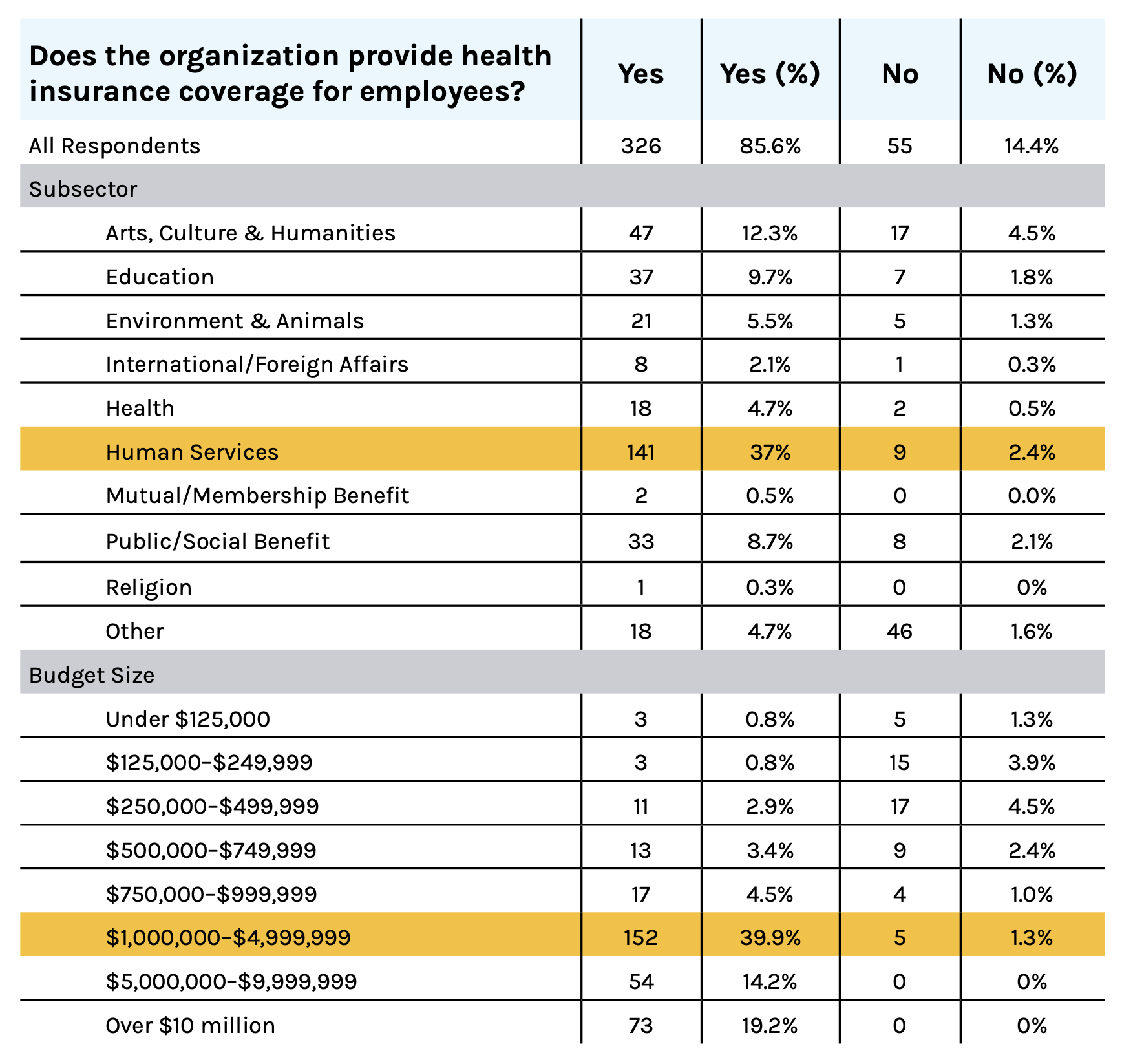
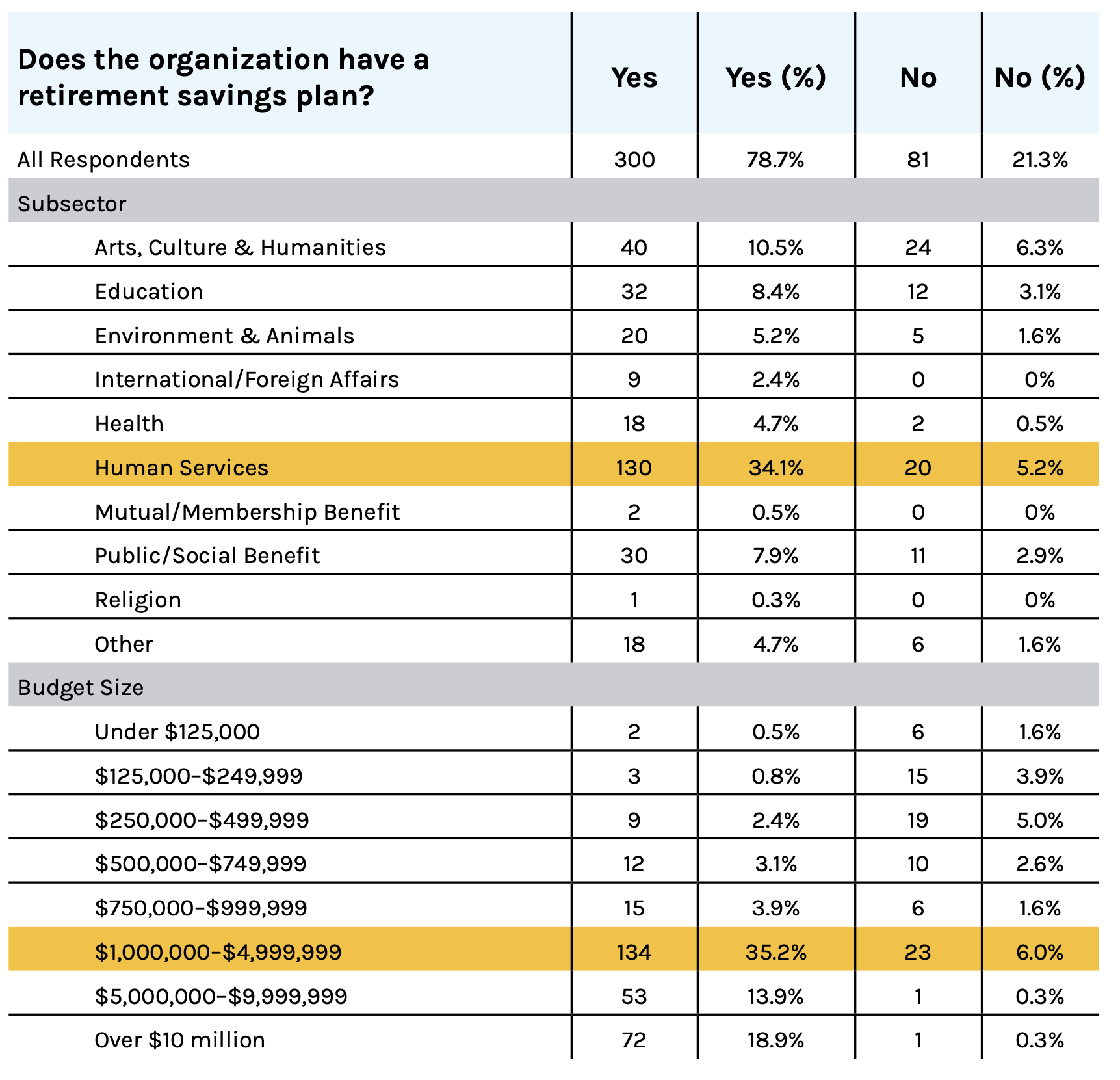
Organizations with the highest proportion of community organizers also tend to have health insurance coverage and retirement plans, relative to total respondents.
Benefits
B. New Jobs Data
In November 2022, New York City instituted a law requiring pay transparency on all job postings. Research indicates that while transparency helps, it can still mask inequalities, especially regarding race and gender. The law in NYC has not been in effect long enough for its impact to be known. However, it created the opportunity to compile a small set of new jobs data from postings alone.
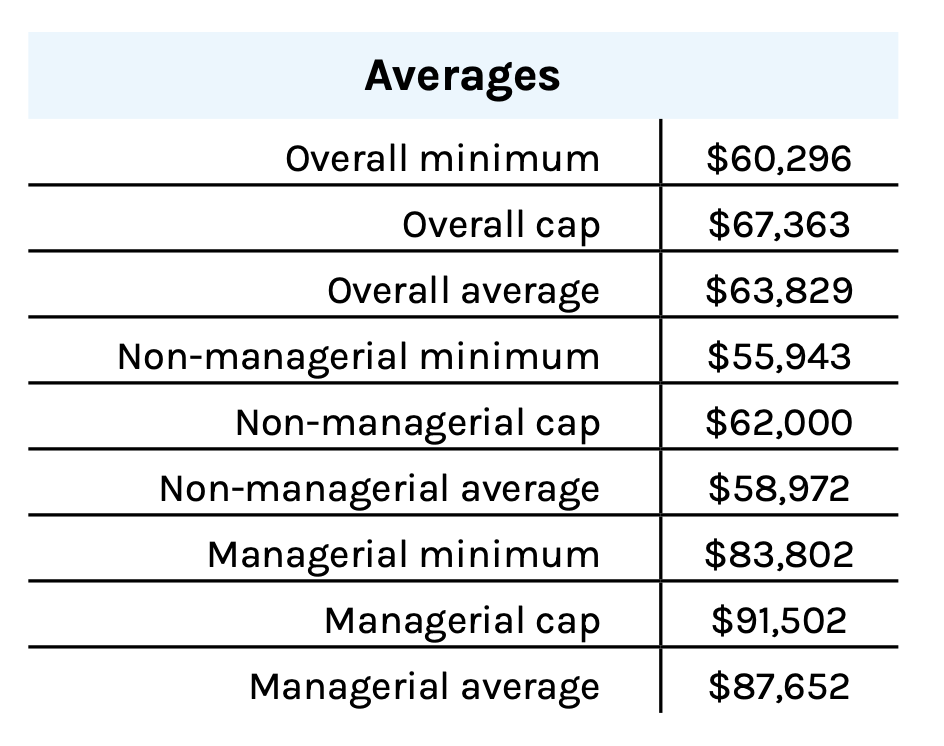
With more information available in job postings, more detailed—though not necessarily more meaningful—data can be pulled from this smaller data set. This includes three key sets of information: starting salary bands as opposed to the actual pay reported in the NPNY survey data (band size ranges from $2,000–$25,000, and 8 positions indicate no range).
If qualifications include a range of years of experience, the data includes the bottom end of that range. If a job description includes experience in its qualifications without providing a number of years, it was defined as 1 year. This data does not distinguish between preferred and required qualifications regarding experience or degree. Bilingual qualifications are only included if they are required.

Thoughts and Takeaways:
33% (11/33) of jobs posted are for tenant organizers.
The only jobs that do not mention benefits are temporary contracts.
76% (25/33) of postings include a salary band, with the rest including a single amount.
Jobs with union representation have slightly higher salaries.
Notes on Qualifications:
18% (6/33) of postings mention an advanced degree, even as a preferred qualification.
18% (6/33) of jobs require multiple languages (excludes jobs where bilingual candidates are preferred).
Entry level community organizer jobs still require an average of 2 years of experience. (If a posting indicates a range of years of experience, the data reflects the lower end. If a posting indicates experience desired without specifying number of years, the data indicates 1 year of experience required.)
General Results

The difference between the Nonprofit NY study and new jobs data for lower tier
salaries varies slightly (<$10,000), accounting for inflation (3.4% in 2023) with a slight increase to reflect overall wage growth. Given this consistency across data sets, it is reasonable to use the inflation-adjusted average salary from both data sets to arrive at the most accurate estimates.